Piping MTO software
Piping material take-off from the Navisworks model
Metriq MTOreads a Navisworks NWD federation, lets you choose which source models belong in the bid, and gives you a line-based piping MTO in your client’s own Excel schema, with an evidence report behind every total. Duplicates are counted once, and anything the model cannot evidence is listed, never invented.
Who it is for
It is built for the person who has to price a piping package from a model they did not author: the estimator at a mechanical or MEP contractor, the quantity surveyor measuring a services package, or the BIM consultant asked for “the numbers” out of a coordination model. Typically you receive a federated NWD at tender, you do not have the source Revit or Plant 3D project, and the measuring has to happen inside the tender window rather than after it.
If you already run a mature Navisworks Quantification template and your models arrive clean, you may not need it. Where it earns its place is the federation that stacks superseded revisions and two disciplines’ copies of the same run, where measuring by hand takes days and a single total is no use to procurement.
What goes in
One file: a Navisworks NWD, up to 300 MB, dragged in from your browser. There is nothing to install and no per-seat licence. Processing runs on its own, so you can close the tab; on the largest federation we have run — 210 MB and 1.3 million objects — it took about 40 minutes end to end.
The software reads what the model publishes. For a usable take-off each component needs a class or category, a size, and on pipe a length. Our guide to getting a piping MTO out of Navisworks explains what the model has to carry before any tool can count it.
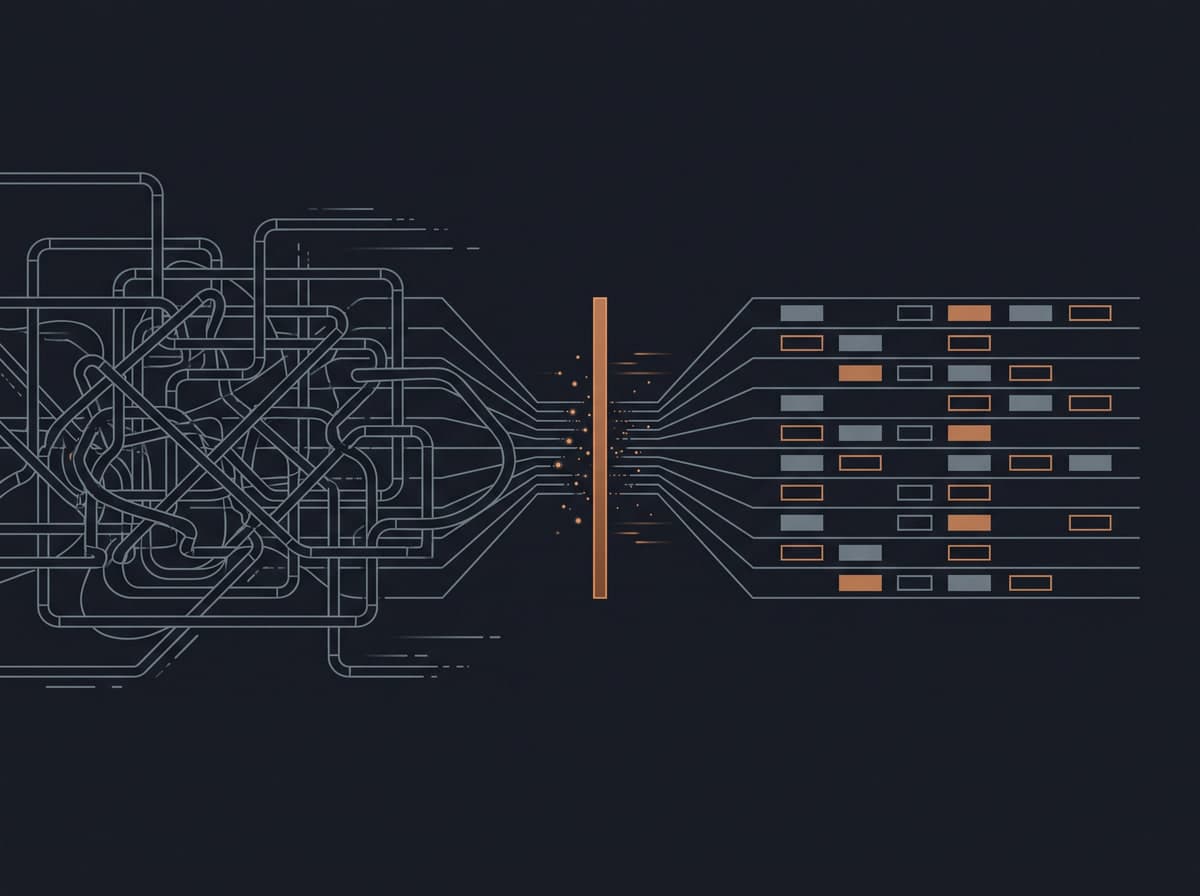
What comes out
- An Excel workbook, up to 10 sheets— Summary, Heading Breakdown, MTO, Fitting Breakdown, Steel, Valves, Material Summary, Material Detail, Unknown Items and Method. Sheets appear when the model carries the data for them. It is editable and in your client’s column order.
- A PDF evidence report — the diameter breakdown, the fitting breakdown by code and size, what was excluded and why, and the method used. You can hand it to your client with the bid.
- A material breakdown — quantities split by material where the model publishes it, so procurement can price from the sheet.
- 3D verification — click any row and see the exact objects behind it, isolated in the model. Available on cloud-processed models.
- Ask the data— a plain-English question such as “how much 4-inch pipe on the CIP lines?” is executed against the take-off rows, not generated.
The unit convention is the one an estimator expects: pipe in metres, fittings and valves in each. Items the model cannot evidence go on the Unknown Items sheet instead of into the totals.
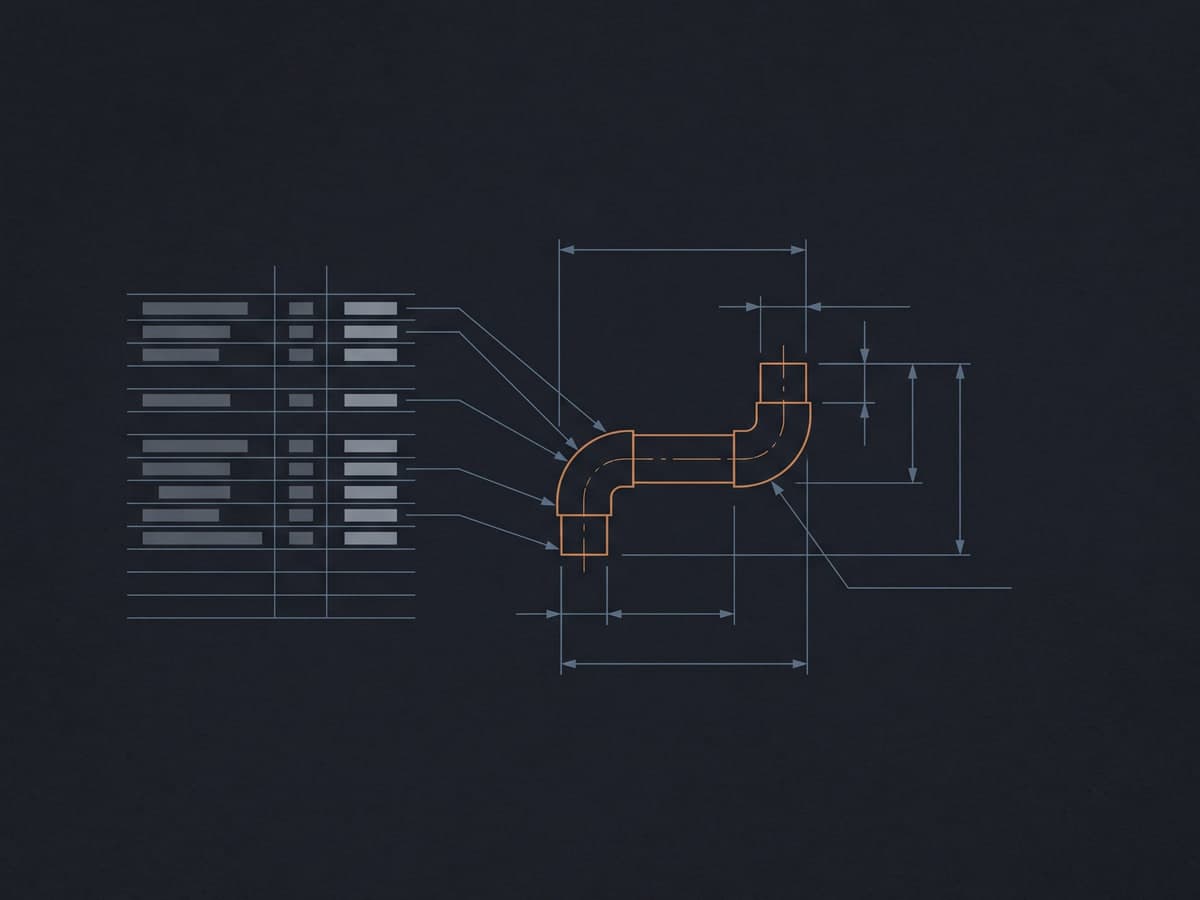
How scope works
A federation is not the tender. Once the model is processed, every source model inside it is listed with its own quantities. You tick the ones that belong in the bid, which takes under two minutes, and that one decision is applied to the screen, the workbook and the evidence report at the same time — so the three never disagree.
Before anything is measured, every object is fingerprinted, and byte-identical copies across source models collapse to one. Nothing is estimated and nothing is thrown away; the same pipe is simply bought once.
One real federation, anonymised. 82,200 duplicate objects were counted once, keeping 7,104 m of phantom pipe out of the bid. Ticking the tendered source models then took the total from 20,376 m for the full model to 10,692 m for the tendered scope.
Pricing
Two ways to pay, both excluding VAT and both paid by card through Paddle, our merchant of record.
| Plan | Price | What it covers |
|---|---|---|
| Subscription | £200 / month | Unlimited users; 15 models a month, including 3 large federations over 150 MB; 5 GB upload a month; files up to 300 MB; re-runs of measured models; your MTO template mirrored in the first month. Overage £60 per extra project. |
| Single file | £100 one-off | One NWD federation up to 300 MB; the Excel workbook, evidence report and on-screen breakdown; results kept to open and download. No renewal, no monthly allowance. |
The subscription is monthly and can be cancelled any time from the billing portal. A single file is refunded in full within 14 days if the model has not been processed; once processed, the purchase is final. Paddle adds any VAT due at your country’s rate — a UK customer pays £240 a month, or £120 for a single file. Full details are on the product page.
Honest limits
- The model must carry property data. Plain meshes or dumb solids carry no sizes or classes, so they produce no rows. You are told that instead of being given an estimate.
- 300 MB per file. Larger federations are split by discipline and measured as separate runs.
- The input is an NWD. If all you have is PDF drawings, a 2D take-off tool is the right job for it, not this.
- Template mirroring comes with the subscription. Conventions such as whether 45° bends fold into 90s or collars count 1:1 are mirrored in the first subscription month. A single file is measured with the rulebook and schema as they stand.
- No accuracy percentage. Calibrating and scoring on the same file is not a measurement. You get the evidence instead: every row, its source model and the geometry behind it.
- No direct integration. The output is Excel in your schema, which you import into your own estimating tool.
Questions estimators ask
What does the software need from me?
A Navisworks NWD federation of up to 300 MB. The model has to carry property data — classes, sizes and lengths published by the authoring tool. A federation of plain meshes produces no take-off rows, and we tell you that instead of estimating.
What do I get back?
An Excel workbook of up to 10 sheets in your client’s column order, and a PDF evidence report with the diameter breakdown, the fitting breakdown by code and size, what was excluded and why, and the method used. Pipe is reported in metres; fittings and valves in each.
How are duplicate objects in a federation handled?
Every object is fingerprinted before it is measured, and byte-identical copies across source models are counted once. In one 210 MB federation that was 82,200 duplicate objects — 7,104 m of phantom pipe that never reached the bid.
How much does it cost?
£200 a month excluding VAT for the subscription, with unlimited users and 15 models a month, or £100 excluding VAT to measure a single file once. A UK customer pays £240 a month, or £120 for a single file, including VAT.
Does it connect directly to my estimating software?
No. The output is an Excel workbook in your client’s schema, which you import into whatever estimating or pricing tool you already use. There is no direct integration.
Start with one model you have already measured by hand. Upload the NWD, choose the scope, and compare the workbook and evidence report against your own numbers.